
Garden Match: Win Cash
Bear Hug Entertainment LimitedPuzzle
4.6625.00 Reviews
- Version
- 1
- Installs
- 50.00K
- Age Rating
- Mature 17+
Screenshots

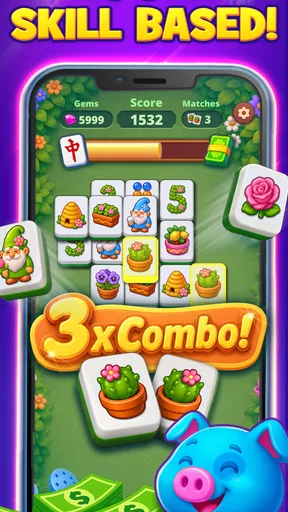
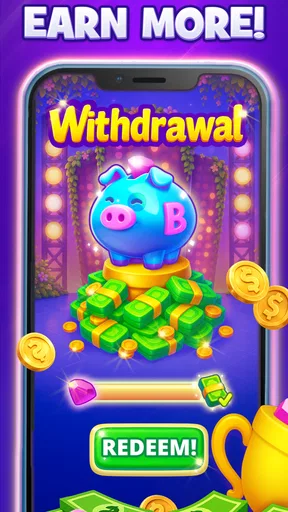

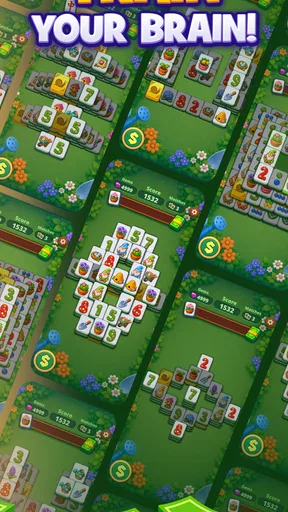

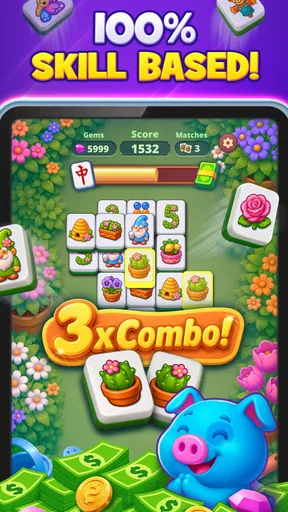
Our Review of Garden Match: Win Cash
 Analysis by Appyee
Garden Match: Win Cash is the kind of puzzle game I can open for a short break without needing to learn a complicated system first. Its basic appeal is easy to understand: collect tiles, clear the board, and work toward rewards while moving through a cosy garden-themed setting. I reviewed it as a mobile puzzle rather than as a serious strategy title, and that distinction matters. The enjoyment comes from making quick decisions, spotting useful combinations, and deciding when a move is worth saving for later.
It is a free game from Bear Hug Entertainment Limited, listed for mature players aged 17 and over. That age guidance is important because the reward-focused presentation may not suit younger players or anyone who prefers completely relaxed, non-monetary puzzle games. The game has attracted a 4.6 average from around 17 thousand ratings and more than 50 thousand installs, which suggests that its simple format has found an audience. I would still judge it by the way it fits your habits, because a good rating does not automatically make every reward-based game a good match for every player.
How Garden Match feels during ordinary play
I find ordinary play easiest to enjoy when I treat each board as a small sorting problem, not a race toward the reward screen. A quick scan before the first tap helps me spot which tiles may be awkward to clear later and makes even a brief session feel deliberate. That simple approach also makes it easier to tell whether the game’s gentle pace suits the kind of puzzle break I want.
Quick starts and the speed I would expect
The strongest part of the experience is its immediate readability. I do not have to spend much time working out what the board is asking me to do. A tile-collecting puzzle can be understood within moments, so it works well when I have only a few minutes available. That makes it more convenient than a larger match-three game with lengthy story scenes, several currencies, or a long chain of introductory lessons.
I would describe the expected pace as light and turn-focused rather than frantic. The important question is usually not whether the game can react quickly enough, but whether I can see the board clearly and choose a sensible collection order. On a recent phone, I would expect the core interaction to feel straightforward, although the experience can naturally feel less comfortable on a small display where tiles and surrounding artwork compete for attention.
One useful habit is to pause before taking the first obvious group. In a tile-collection puzzle, the easiest move is not always the most valuable one. I found it more helpful to look for pieces that might block access to a larger set, then clear the awkward area first. This small change makes the game feel less like random tapping and more like a compact planning exercise.
The cosy presentation also changes the mood. Garden Match is not trying to create the pressure of a timed arcade puzzle. I can play it while waiting for an appointment or during a short commute, provided I am not expecting a deep campaign. Its appeal is the combination of familiar tile decisions and a softer visual setting, not a demanding competitive challenge.
What happens when I play for longer sessions
Short sessions suit the design better than marathon play. After several boards, the basic action of collecting and clearing can begin to feel repetitive if you want constant mechanical variety. That is not necessarily a flaw; many puzzle players enjoy repetition when the board arrangement changes enough to keep decisions interesting. However, people who need new rules, elaborate objectives, or a strong narrative may find the loop narrow.
Longer use is also where reward expectations become more important. The phrase “win cash” can make a player imagine a direct and predictable path to money, while the actual enjoyment of a game like this should come from solving the puzzles first. I recommend treating rewards as a possible extra rather than as a dependable reason to spend every spare moment playing. That mindset prevents the game from feeling disappointing when a session is enjoyable but not financially meaningful.
A practical approach is to set a stopping point before starting. I might play until I finish a small group of boards, then close the game instead of continuing simply because the next objective is visible. This is especially useful for anyone who is sensitive to reward loops. The game is at its best when it remains a pleasant puzzle break rather than becoming a background task that demands constant attention.
For heavier use, I would also keep the phone in a comfortable state: close demanding apps if the device is older, avoid playing with very low battery, and give the game time to load fully before switching rapidly between screens. These are ordinary mobile habits, but they matter more in a game built around repeated short sessions than in an app opened once a week.
Stability, interruptions, and recovering from a session
My reliability judgement is deliberately practical. A puzzle game should let me return to the current activity without making the whole session feel fragile. If I receive a call, move to another app, or lock the screen, the most reassuring experience is one that allows me to come back calmly rather than forcing me to rush. I would therefore test Garden Match in the situations where I am most likely to use it: between errands, during a break, and with other apps already open.
Because the game is built around individual board decisions, an interruption can be more frustrating than it would be in a purely passive app. Before leaving the screen, I would finish the move I am considering instead of abandoning a half-planned sequence. That is a small but useful recovery habit. It reduces the chance that I return and forget which tile group I intended to collect.
I also recommend reopening the game after a normal pause rather than assuming that every session will remain active indefinitely. Mobile operating systems may reclaim memory, especially on devices with limited resources. If the game returns to its starting point after an interruption, that is a meaningful inconvenience for a player who prefers uninterrupted progress. I would not call that a Garden Match-specific defect without testing every device, but it is exactly the kind of behaviour worth checking during your first few sessions.
The current version is listed as version 1, so I would approach it as an early release and pay attention to how it behaves on my particular phone. That does not mean it will be unstable. It simply means that personal testing is more useful than assuming a newer, heavily revised app experience. If the board opens consistently, taps register properly, and returning from a brief interruption feels predictable, the game meets the reliability standard I want from a casual puzzle.
Device limits and everyday comfort
The game supports devices running Android 9 or later. That gives it a reasonably broad starting point for Android users, but the operating-system requirement is only one part of the experience. Screen size, available memory, battery condition, and how many other apps are running can all affect comfort. A phone that handles ordinary messaging easily may still feel cramped if the board uses small visual elements or if the garden artwork reduces contrast.
On a compact phone, I would play with the device held steadily rather than trying to operate it one-handed while walking. Tile puzzles reward accuracy, and an accidental tap can be more annoying than a slightly slower move. On a larger display, the garden theme should be easier to appreciate, while the board may also be easier to scan for groups and blocked opportunities.
Resource demands are best judged by observation rather than assumption. I would watch for unusual warmth, rapid battery decline, delayed responses, or the game being removed from memory when I switch away. If none of those appear during normal play, it is reasonable to regard the workload as comfortable for that device. If they do appear, reducing background activity and restarting the game are sensible first steps before deciding that the title is unsuitable.
Storage and connectivity can also influence whether a free mobile game feels convenient, but I would not let the download itself determine the decision. The more important question is whether the game fits your available attention. Someone with an older Android phone may be perfectly happy if the board remains responsive, while a newer-phone owner may still dislike the reward-oriented structure. Hardware capability and personal preference are separate issues here.
How it compares with familiar puzzle alternatives
Compared with a traditional match-three game, Garden Match feels more focused on collecting tiles and clearing a board than on chaining colourful pieces through a constantly changing grid. That makes it a better fit for players who enjoy sorting, planning, and controlled removal. If you prefer explosive combos, power-ups, and a strong level-to-level spectacle, a conventional match-three alternative may provide more excitement.
Compared with a purely relaxing tile game, the reward angle adds another layer of motivation but also creates a trade-off. A calm, offline-style puzzle may be preferable if you want to play without thinking about prizes or outcomes beyond completing the board. Garden Match is more suitable when the possibility of rewards makes a simple puzzle loop feel worth returning to, as long as you keep realistic expectations.
It also differs from a deep strategy puzzle. I would not choose it when I want complex resource management, lengthy planning trees, or a campaign that keeps introducing new systems. Its strength is accessibility: I can understand the immediate task and begin making decisions quickly. The cost of that accessibility is that experienced puzzle fans may eventually want more variety than the basic loop provides.
One of the less obvious trade-offs is attention density. Because the rules are easy to grasp, the game can fit into small gaps in the day, but that same simplicity makes the quality of each board arrangement especially important. If the layouts do not offer enough meaningful choices, the game can feel like routine clearing rather than satisfying problem solving. I would judge it after a series of sessions, not after the first attractive garden screen.
Who should try it, and who should skip it
I think Garden Match is a good candidate for players who enjoy accessible tile puzzles, prefer short mobile sessions, and like a gentle visual theme. It may also suit someone who wants a simple activity during a daily pause without committing to a large adventure game. The free entry point makes it easy to test the basic loop before deciding whether it deserves a regular place on the phone.
I would be more cautious if your main reason for downloading is the promise of cash. Rewards should not replace your normal financial judgement, and I would never treat a game as a reliable source of income. Before investing significant time, read the in-game conditions carefully and decide whether the puzzle remains enjoyable without the reward expectation. If it does not, a standard free puzzle may be a healthier choice.
You may also want to skip it if you dislike mature-rated reward themes, repetitive board clearing, or games that ask you to return frequently. Players looking for a completely offline, no-pressure experience may feel better served by a conventional tile-matching title with no reward emphasis. Likewise, people with very small screens or older hardware should test readability and responsiveness early rather than assuming the minimum operating-system requirement guarantees a perfect fit.
Small habits that improve the experience
My first tip is to scan the whole board before collecting anything. Look for the tile group that is hardest to reach, not merely the group that is largest at first glance. Clearing an accessible set can sometimes remove the opportunity to deal with a more restrictive area, so a few seconds of observation can prevent a careless sequence.
My second tip is to separate puzzle decisions from reward decisions. Finish the board because the move makes sense, then consider what the result means within the game. Mixing those thoughts can encourage rushed taps, especially when a reward is presented as the next motivation. Keeping the puzzle in control makes the game feel more satisfying and less like a chore.
My third tip is to use Garden Match as a planned break rather than an automatic reflex. A short session after lunch, while waiting for transport, or between household tasks is a realistic use case. If I open it whenever I feel bored, the simple loop can become background noise. If I choose a clear stopping point, the same loop feels more like a small game and less like an obligation.
Finally, I would test the game under the conditions in which I really intend to play. Try it with the phone on a lower battery, after switching from another app, and in a place where the screen is not perfectly bright. That tells you more about practical reliability than a single uninterrupted first launch. It also reveals whether the board remains comfortable when your attention is divided, which is where casual mobile games often succeed or fail.
My overall view after weighing the trade-offs
Garden Match: Win Cash works best as a straightforward, cosy puzzle with an added reward-oriented reason to return. I like that the central action is easy to understand and that the format can fit naturally into short breaks. The game does not need a complicated tutorial or a large commitment to make sense, and its Android 9 minimum gives it a practical reach across many devices.
My reservations are equally clear. The core loop may not offer enough variety for players who want a deep puzzle campaign, and the reward framing can create expectations that a casual game should not be asked to fulfil. Performance should be judged on your own phone, particularly because the listed version is early and mobile behaviour can vary with memory, screen size, and background activity.
Overall, I would recommend trying it if you want an approachable tile-clearing game and can regard rewards as secondary. I would choose a traditional puzzle alternative if I wanted richer mechanics, a more predictable no-pressure structure, or a stronger long-term progression system. For the right player, the best feature is not simply the possibility of winning; it is having a small, readable board to solve whenever a few quiet minutes appear.
Verdict
Strengths of Garden Match: Win Cash
- Relaxing garden-themed visuals make matches feel pleasant and easy to follow.
- Short puzzle rounds fit well into quick breaks or casual play sessions.
- Simple match mechanics are accessible for beginners and non-gamers.
- Progression rewards can make completing levels feel satisfying.
- Cash-prize events may add extra excitement for competitive players.
Limitations of Garden Match: Win Cash
- Cash rewards may require meeting strict conditions before withdrawal.
- Some prize-based features may be unavailable in certain countries.
- Optional purchases can become tempting when progress slows down.
- Difficulty may increase sharply after the early introductory levels.
- An internet connection may be needed for events, rewards, or account features.
Other Releases by Bear Hug Entertainment Limited
View All
Treasure Tiles: Win Cash
Puzzle4.6

Win Words: Crosswords Game
Word4.6
Similar Picks in This Category
View All
Block Blast!
HungryStudio4.8

Braindom: Brain Games Test
Lahana Game Studio4.6

AMAZE!
CrazyLabs LTD4.6

Sudoku - Classic Sudoku Puzzle
Oakever Games4.7

Art Puzzle - Puzzle Games
Easybrain4.8

Amaze GO!
Oakever Games4.9
Frequently Asked Questions
What is Garden Match: Win Cash?
Garden Match: Win Cash is a match-3 puzzle game built around a garden-themed setting. You complete levels by matching identical items, clearing objectives, and progressing through increasingly challenging stages. The game may also promote cash prizes or rewards, but the exact availability, eligibility rules, and withdrawal conditions can depend on your location, age, platform, and the current terms shown inside the app.
Can you really win real money in Garden Match: Win Cash?
The game may offer opportunities to earn cash rewards through tournaments, challenges, or promotional events, but winning is not guaranteed. Prize pools, entry requirements, rankings, and payout rules can change, so you should read the event details carefully before participating. Treat the game primarily as entertainment, and never spend money or make deposits expecting a reliable financial return.
Is Garden Match: Win Cash free to download and play?
Garden Match: Win Cash can generally be downloaded without an upfront purchase, although the app may include advertisements, optional in-app purchases, or paid competitive events. Some features may require watching ads or using virtual items, while other costs can vary by country and device. Check the store listing and the in-game payment screens before confirming any transaction.
How do withdrawals and cash rewards work?
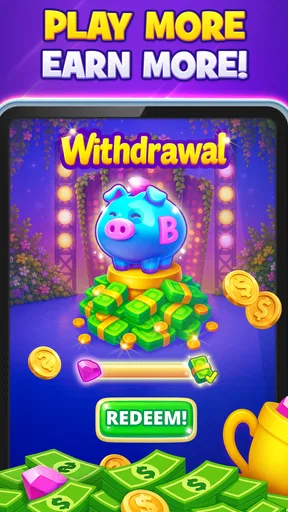
Cash rewards are normally subject to specific conditions, such as reaching a minimum balance, completing identity or account verification, using an approved payment method, and meeting regional eligibility requirements. Processing times may vary, and some rewards can be promotional rather than withdrawable cash. Before investing time or money, review the withdrawal policy, fees, restrictions, and privacy requirements in the app.
Is Garden Match: Win Cash safe for children and personal data?
Because the game involves prize-related features, it may not be suitable for children, even if the puzzle gameplay looks simple and family-friendly. Age restrictions, parental consent, and local gambling or contest regulations may apply. The app can also request account, device, or payment-related information, so review its privacy policy and permissions carefully before creating an account or submitting personal details.
Play our best games!


